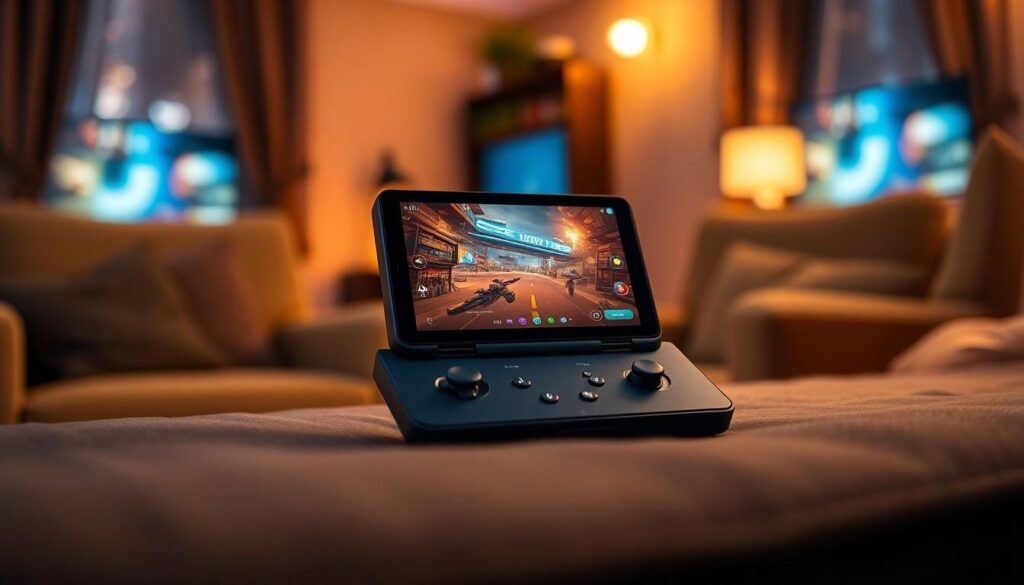
In the ever-evolving world of handheld gaming, the Steam Deck stands out like a beacon of portable joy. Gamers everywhere are buzzing about this little powerhouse, but with so many options out there, how does it stack up against the competition? It’s like trying to choose between pizza and tacos—both are delicious, but one might just hit the spot a little better.
Overview of Steam Deck
Steam Deck functions as a handheld gaming device developed by Valve Corporation. This console enables players to access their entire Steam library on the go. Featuring a custom AMD APU, it combines a quad-core Ryzen CPU with RDNA 2 graphics, delivering robust performance.
A 7-inch LCD touchscreen offers a resolution of 1280×800 pixels, providing vibrant visuals. It supports up to 60 frames per second in many titles, ensuring smooth gameplay. Ports include USB-C for charging and accessories, along with a microSD card slot for expanded storage.
Steam Deck operates on a Linux-based SteamOS 3.0, allowing users to run other software as well. Players can install Windows or other operating systems, broadening its capabilities beyond gaming. Native support for various game genres, including AAA titles and indies, showcases its versatility.
Built-in controller features embrace a comfortable design. It includes trackpads for precise control, thumbsticks with haptic feedback, and a layout reminiscent of traditional game controllers. Customization options permit players to adjust controls based on personal preferences.
Battery life ranges from two to eight hours, depending on usage and game demands. Users can expect up to 16 hours of standby time, making it suitable for extended play sessions. Overall, Steam Deck is a comprehensive handheld solution for gamers seeking flexibility and performance.
Key Features of Steam Deck

The Steam Deck combines powerful hardware with an intuitive software experience, making it a top choice for gamers. This section explores the hardware specifications and user interface of the device.
Hardware Specifications
The Steam Deck features a custom AMD APU, integrating a quad-core Ryzen CPU with RDNA 2 graphics. This combination delivers impressive performance capabilities, supporting demanding games seamlessly. A 7-inch LCD touchscreen with a resolution of 1280×800 pixels enhances visual clarity while providing smooth gameplay at up to 60 frames per second. Equipped with USB-C ports, it allows easy connections for charging and accessories. Users can expand storage through a microSD card slot, accommodating a variety of game libraries. Battery life varies significantly, ranging from two to eight hours based on usage, while the standby time can reach up to 16 hours.
Software and User Interface
The Steam Deck runs on a Linux-based SteamOS 3.0, facilitating a versatile computing experience. Users access their entire Steam library effortlessly, enjoying a broad spectrum of game genres. This operating system supports additional software installation, including Windows, enhancing usability for non-gaming applications. An intuitive user interface simplifies navigation, making it user-friendly for both newcomers and experienced gamers. Features such as customizable controls and haptic feedback align with user preferences, resulting in a dynamic gaming experience. Overall, the software design emphasizes flexibility, catering to various gaming needs.
Steam Deck vs. Competitors
The Steam Deck competes with notable handhelds and gaming laptops, creating distinct options for gamers.
Nintendo Switch Comparison
The Nintendo Switch targets a broad audience with its hybrid design. Gamers can enjoy both handheld and docked modes, enhancing flexibility. In contrast, the Steam Deck emphasizes its superior hardware, featuring a custom AMD APU. Visual capabilities on the Steam Deck exceed the Switch with a resolution of 1280×800 pixels. Battery life also varies, with the Steam Deck lasting between two to eight hours, while the Switch offers about four to nine hours. Both devices boast extensive game libraries, yet the Steam Deck allows access to the entire Steam ecosystem, providing a wider variety of PC titles.
Gaming Laptop Comparison
Gaming laptops offer powerful performance, often outpacing handhelds in raw specifications. However, portability becomes a drawback when comparing laptops to the Steam Deck. Compact and lightweight, the Steam Deck allows convenient gaming on the go. Gaming laptops require more setup time and often need to be plugged in. Furthermore, the Steam Deck typically costs less compared to mid-range gaming laptops, making it an attractive choice for budget-conscious gamers. Connectivity options differ as well, with laptops featuring more ports but the Steam Deck providing a USB-C hub for versatility.
Performance Analysis
The Steam Deck excels in performance, especially when comparing its features to competitors in the handheld gaming market.
Graphics and Gameplay Experience
Graphics quality and gameplay experience significantly enhance the appeal of the Steam Deck. It utilizes a custom AMD APU with RDNA 2 graphics, delivering detailed visuals and smooth gameplay. Gamers consistently enjoy accessing their entire Steam library, which includes demanding titles. Frame rates reach up to 60 frames per second, ensuring fluid motion during action-packed sequences. The 7-inch LCD touchscreen with a resolution of 1280×800 pixels provides sharp imagery that showcases game designs vividly. Overall, the graphics and gameplay mechanics combine to create an immersive experience for players across various genres.
Battery Life and Portability
Battery life and portability represent crucial factors for handheld gaming devices like the Steam Deck. The device supports a battery range of two to eight hours, depending on usage intensity. Lightweight design enhances portability, making it easy to carry for on-the-go gaming. Standby time can extend up to 16 hours, allowing players to keep their device ready for spontaneous gaming sessions. Gamers benefit from its USB-C ports, which support fast charging and accessory connectivity. These features position the Steam Deck as a handy solution for gamers seeking a balance between performance and mobility.
User Experience
User experience on the Steam Deck stands out due to its thoughtful design and versatile library. Players appreciate how it caters to various preferences, making it attractive to diverse gaming communities.
Comfort and Ergonomics
Comfort plays a key role in the gaming experience. The Steam Deck features a balanced design that reduces fatigue during extended gameplay sessions. Buttons and triggers are well-placed, ensuring quick access without straining fingers. Handheld play feels natural, supported by textured grips that enhance security. Players find the layout intuitive, allowing them to focus solely on their game without discomfort. Reviews consistently praise the device’s ergonomic shape, which accommodates varied hand sizes effectively, contributing to a pleasurable gaming experience.
Game Library and Compatibility
Game library and compatibility are major advantages of the Steam Deck. This device grants access to a vast library of over 50,000 titles on Steam, encompassing numerous genres. Players enjoy compatibility with various game formats, including indie and AAA games, broadening their options. Valve’s SteamOS 3.0 supports not just Steam titles but enables users to install Windows if preferred, enhancing versatility further. Cross-play functionality with PCs also enhances multiplayer experiences. The flexibility offers gamers the freedom to explore virtually any title, cementing the Steam Deck’s place as a central gaming hub.
Conclusion
The Steam Deck emerges as a formidable contender in the handheld gaming landscape. Its powerful hardware and user-friendly design cater to both casual and hardcore gamers. With a vast library of games and the flexibility of SteamOS 3.0, it offers an unparalleled gaming experience on the go.
When weighing options like the Nintendo Switch or gaming laptops, the Steam Deck’s combination of portability and performance makes it a standout choice. For gamers seeking an affordable yet robust handheld solution, the Steam Deck delivers impressive value. As the gaming world continues to evolve, it’s clear that the Steam Deck is well-positioned to meet diverse gaming needs.